Chai vs Chai Latte: What Is Actually the Difference and Why It Matters

If you have ever ordered a chai latte at a café and thought “this is nice, but why are people so obsessed with chai?” the answer is simple: because chai latte is not chai.
They share a name. They are both hot. They both contain milk. Beyond that, they are fundamentally different drinks. And no, this is not snobbery. It is accuracy. Neither is wrong to drink. But understanding the difference is important.
Where the confusion started
For most people in Europe and North America, chai arrived through café culture. A chai latte appeared somewhere between the flat white and the matcha, sounded interesting, and became their reference point for what “chai” was supposed to taste like.
What most people did not realise is that chai latte is a Western adaptation of traditional Indian chai - streamlined for syrups, speed, consistency and a sweeter palette. A version engineered to taste pleasant to the broadest possible audience. But it can be a starting point perhaps, for anyone curious enough to find their way to the real thing.
What actually goes into each one
Indian chai is made by boiling black tea with whole spices, sugar and milk. It is not a flavoured milk drink with vague spice notes floating in the background. It is black tea aggressively infused with actual spices: cardamom, ginger, cinnamon, cloves, black pepper. You are supposed to taste the sharpness of ginger. You are supposed to feel the warmth of black pepper lingering in your throat. The tea itself is meant to be strong enough to stand up to milk instead of disappearing underneath it.
A chai latte is typically built from industrially processed concentrate or syrup with artificial spice flavours and added sugar, and then steamed milk is poured on top. Not seldomly, you find that chai latte contains vanilla or star anise, which no chai vendor in India would ever dream of adding. It’s smooth, sweet, predictable and designed to offend or challenge no one.
Neither is dishonest about what it is. They are just made differently and they taste differently. One is a traditional spiced tea with a long history behind it. The other is a modern café drink inspired by that tradition.
The sugar question
This is probably the biggest practical difference between the two. Most commercial chai latte syrups and concentrates are quite sweet. Some are very sweet. The sweetness is built in before you have added anything. With real masala chai, you control the sweetness entirely. A little jaggery, sugar, or nothing at all. The spices provide their own natural complexity that makes the drink feel satisfying without needing much sugar to do the work.
For anyone who tries to keep their sugar intake in check but still wants something genuinely warming and flavourful, this distinction matters quite a bit.
What the spices actually do
In a traditional chai, the spices are doing more than creating flavour. For centuries, Indian households have used ginger, cardamom, cinnamon, and black pepper not just because they taste good. Ginger supports digestion and has anti-inflammatory qualities. Cardamom is calming. Cinnamon helps steady energy levels. In Ayurveda this was understood long before wellness influencers started putting cinnamon into oat milk and calling it a health hack.
The ritual is different too
A chai latte is a café product. You grab it, walk with it, photograph it if the foam art is decent enough, and move on with your day. Indian chai demands you slow down for a minute. The smell hits before the cup reaches your mouth. The spices warm your chest properly. It feels grounding in a way that is hard to explain until you have had a genuinely good cup. Both have their place. But they are different experiences.
So which one should you drink?
So should you stop drinking chai lattes? Of course not. If you like them, drink them both depending on the moment. A chai latte from your favourite café on a busy day is a perfectly good thing. But if you have never had a real Indian chai made with actual spices and good tea, you are missing the original. The one that has been warming people up and bringing them together for decades before a café menu ever got involved.
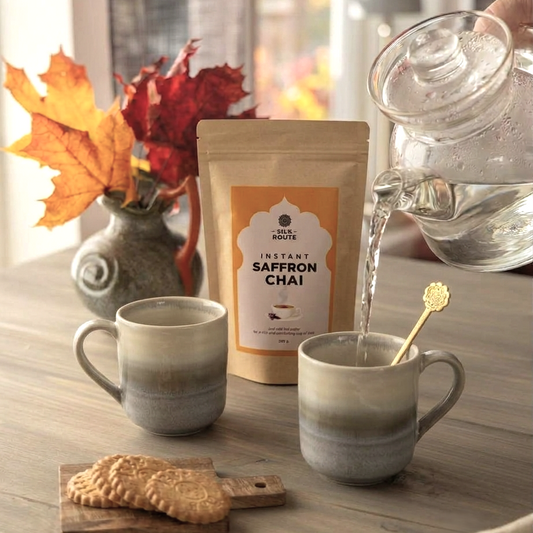
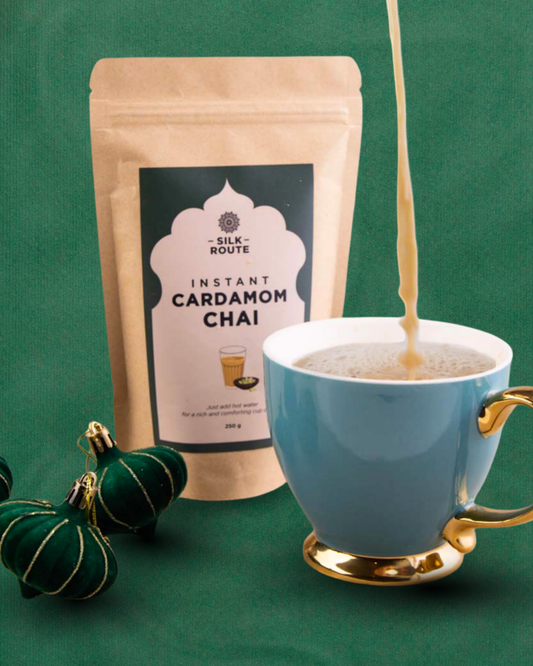
The good news is you don't have to choose between convenience and authenticity. You can have a cup of real chai just as quickly as anything else in your kitchen. The ritual, the spice, the warmth, all of it, in the time it takes to boil water.